
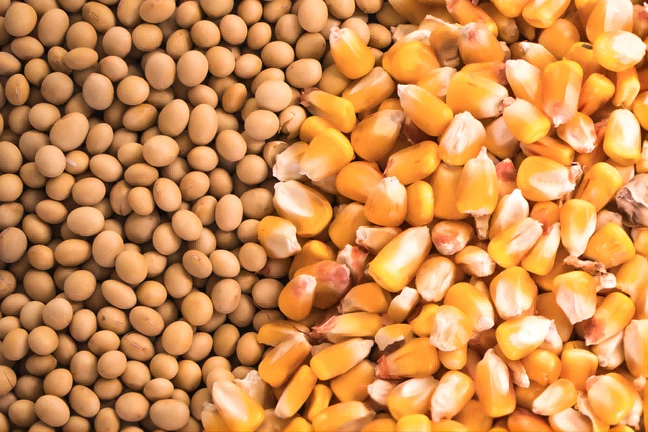
2023 numbers are finally in. It has been a very interesting year with shifting import/export numbers. We focus on the main 2 grains that our industry mostly depends on to produce lots of our products.
Main producer countries: World Production 1,235,700 (1000 MT)
| Country | Production (1000 MT) | Percentage of World production |
| USA | 389,694 | 31.54% |
| China | 288,842 | 23.38% |
| Brazil | 127,000 | 10.28% |
| EU | 60,100 | 4.86% |
| Argentina | 55,000 | 4.45% |
| India | 35,000 | 2.83% |
| Ukraine | 30,500 | 2.47% |
| Mexico | 25,500 | 2.10% |
| Russia | 17,000 | 1.38% |
| South Africa | 16,800 | 1.36% |
*The top 3 countries have grown almost 2/3 of the world production.
Main Exporter countries: World Exports 200,886 (1000 MT)
| Country | Exports (1000 MT) | Percentage of World Exports |
| Brazil | 54,000 | 26.88% |
| USA | 53,342 | 26.55% |
| Argentina | 41,000 | 20.41% |
| Ukraine | 21,000 | 10.45% |
| Russia | 5,300 | 2.64% |
*The top 3 countries exported about 3/4 of world exports to other countries.
Main Importer countries:
|
Country |
Exports (1000 MT) |
Percentage of World Exports |
|
EU |
23,500 |
12% |
|
China |
23,000 |
12% |
|
Mexico |
19,600 |
10% |
|
Japan |
15,500 |
8% |
|
South Korea |
11,800 |
6% |
|
Vietnam |
10,300 |
5% |
|
Iran |
8,600 |
5% |
|
Egypt |
8,500 |
4% |
|
Colombia |
6,500 |
3% |
|
Saudi Arabia |
4,900 |
3% |
Corn production has risen over time on increased area and higher yields. Improvements in technology (seed varieties, fertilizers, pesticides, and machinery) and in production practices (reduced tillage, irrigation, crop rotations, and pest management systems) have significantly boosted harvest volumes over the past two decades.
Corn is a major component of livestock feed. Feed use, a derived demand, is closely related to the number of animals (cattle, hogs, and poultry) that are fed corn and typically accounts for about 40 percent of total corn use. The amount of corn used for feed also depends on the crop's supply and price, the amount of supplemental ingredients used in feed rations, and the supplies and prices of competing ingredients.
Corn also has food, seed, and industrial (FSI) uses, the most significant of which is fuel ethanol. Total FSI makes up close to 60 percent of total corn use.
Aside from fuel ethanol, corn is also processed for human consumption and other industrial uses. During processing, corn is either wet or dry milled depending on the desired end products:
Conclusion: China is improving its domestic growing rate to meet the rising demand in corn. While keeping its imports only 7% of its total consumption. Note that the price of the products derived from corn will remain sensitive since the demand is higher than the supply.
Main producer countries: World Production 375,397 (1000 MT)
|
Country |
Production (1000 MT) |
Percentage of World production |
|
Brazil |
160,000 |
42.62% |
|
USA |
116,221 |
30.96% |
|
Argentina |
25,000 |
6.66% |
|
China |
20,284 |
5.40% |
|
India |
12,411 |
3.30% |
*The top 2 countries have grown almost 3/4 of the world production.
Main Exporter countries: World Exports 171,663 (1000 MT)
|
Country |
Exports (1000 MT) |
Percentage of World Exports |
|
Brazil |
95,505 |
55.64% |
|
USA |
54,208 |
31.58% |
|
Paraguay |
6,300 |
3.67% |
|
Canada |
4,240 |
2.47% |
|
Argentina |
4,185 |
2.44% |
*The top 2 countries exported about 7/8 of world exports to other countries.
Main Importer countries:
|
Country |
Exports (1000 MT) |
Percentage of World Exports |
|
China |
100,846 |
61% |
|
EU |
13,199 |
8% |
|
Argentina |
9,059 |
5% |
|
Mexico |
6,442 |
4% |
|
Japan |
3,332 |
2% |
Where is Soybean used?
Animal Nutrition:
Human Nutrition:
Humans need high quality protein; Soybean delivers a vegetable protein option alongside essential amino acids and nutrients in many forms. Food incorporate soybean in milk alternatives, soy milk, protein bars and many others. Soy Protein Isolated, Soy Protein Concentrate & Soy Lecithin is some of the products derived from Soybean.
Conclusion: China remains the main importer of SOYBEAN taking about 60% of global imports. The price of the derived products highly depends on the global price and increasing demands in the market.
Our team at New Ambition along with our producers will work tirelessly to ensure that we supply the most competitive prices of these items while still not compromising on our quality.
We here at New Ambition Chemical proudly produce – with our partners – many items that employ corn & soybean as the raw material. We supply a wide range to our clients around the globe. For an accurate FACTORY DIRECT quote of these items, please inquire with us: sales@ambitionchems.com

